
Draw With Buddies Multiplayer
FiddlersWork GamesWord
4.41.25K Reviews
- Version
- 5.06
- Installs
- 1.00M
- Age Rating
- Everyone
Screenshots
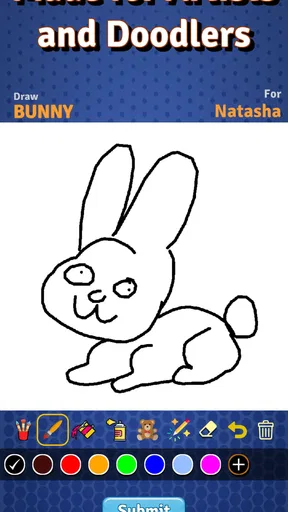
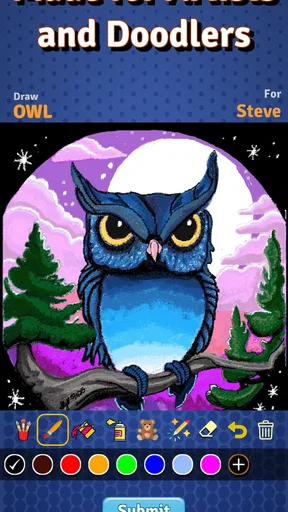
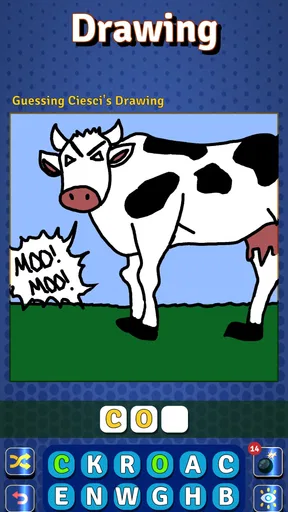
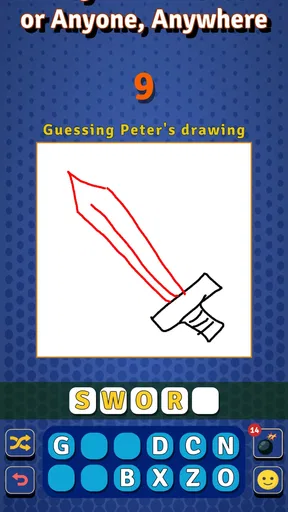
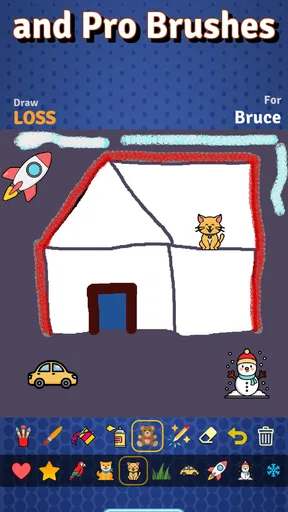

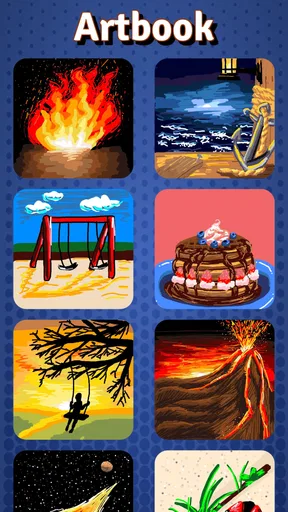
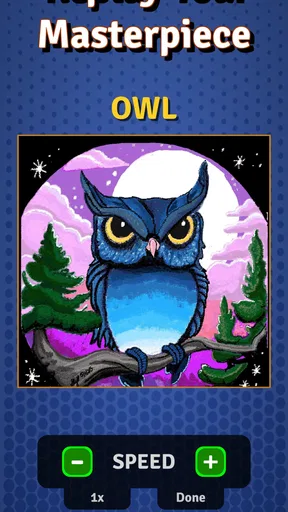
Our Review of Draw With Buddies Multiplayer
 Analysis by Appyee
I picked up Draw With Buddies Multiplayer expecting a quick drawing game, and that is exactly where it works best: as a simple way to turn a spare few minutes into a shared guessing challenge. I draw something, another player tries to identify it, and the fun comes from seeing how far a rough sketch can drift from the intended word. The idea is familiar, but the multiplayer focus gives it a more social feel than a traditional solo word puzzle.
After spending time with it, I see the game as a good fit for people who enjoy casual wordplay without wanting a long tutorial or a complicated rule set. It is a free word game from FiddlersWork Games, rated 4.4 on average from around 6,700 ratings, and it has passed one million installs. Those figures suggest that the basic concept has found a sizeable audience, but popularity alone does not make every session equally enjoyable. The experience depends heavily on who you play with, how patient everyone is, and whether you like communicating through imperfect drawings.
How it works when several people share the moment
The most natural use is a relaxed group setting. Imagine two people sitting in the same room after dinner, one holding a phone and the other watching the drawing appear. The artist has to make an idea recognizable without simply writing the answer, while the guesser studies every line and tries to connect it to a word. That creates a different kind of conversation from a standard quiz: people comment on the drawing, defend their guesses, and laugh when a supposedly obvious picture looks like something completely different.
I also found that the game suits short breaks better than planned, lengthy sessions. A round can become a small activity while waiting for food, travelling, or taking a pause between chores. Because the central action is drawing and guessing, players do not need to learn a large set of controls before joining in. That low barrier is important in a household where one person enjoys games and another normally avoids them.
The strongest moments come from friendly disagreement. A drawing may technically contain the right idea but still be too vague to guess quickly. Instead of treating that as a failure, I found it more entertaining to discuss what the image resembles. This is where the title feels more like a social word game than a serious test of artistic skill. You do not need to draw well; you need to communicate just enough for another person to make the connection.
That simplicity also exposes the main limitation. If everyone wants a deep competitive system, carefully balanced scoring, or a large strategic layer, this is unlikely to satisfy them. The appeal is immediate interaction, not long-term mastery in the way a complex board game or a demanding puzzle app might offer. I would recommend it for casual company rather than for someone searching for a highly structured competitive experience.
Why the shared-device situation needs a little planning
A shared phone or tablet can make the game feel like a living-room activity, but it also creates natural boundaries. If several people use the same device, I would decide in advance who is drawing, who is guessing, and when the device changes hands. That sounds obvious, yet it prevents the common problem where one person keeps control while everyone else becomes an audience.
For a household, a simple rotation works well: one person takes the first turn, another guesses, and the next player takes over after the round. The game becomes more inclusive when people agree not to shout answers immediately. Giving the guesser a moment to think makes the drawing matter, while allowing hints after a reasonable pause keeps younger or less confident players involved.
I would also avoid treating the phone as a communal object without checking whose account or session is active. The game is designed around multiplayer interaction, but a shared device still needs a clear handoff. Before starting, I would close anything private, confirm that the intended player is using the game, and avoid assuming that a child or guest should automatically have access to an adult’s wider device activity.
This is not a criticism of the drawing mechanic. It is simply the practical difference between playing alone and turning a personal phone into a group activity. The game provides the reason to gather around one screen; the household still has to decide how that screen is shared.
Setting expectations before anyone starts
The game is free to download, which makes it easy to suggest for an impromptu session. It also includes in-app purchases ranging from forty-nine cents to nineteen dollars and ninety-nine cents per item. I would explain that clearly before handing the device to a child or letting a guest explore independently. Free access and optional purchases are not the same thing, and a quick conversation avoids confusion later.
In my experience, the best setup is to treat the game as a shared activity rather than an unattended distraction. An adult can introduce the rules, demonstrate one drawing, and then let the players take over. That approach gives everyone a common understanding of what counts as a helpful picture and reduces the temptation to turn every round into an argument about whether a guess was close enough.
The current version is 5.06, and it runs on Android 7.0 or later. That makes it accessible on a range of older Android devices, although the actual comfort of playing will still depend on screen size and how easily each person can see the drawing. A small phone can work for two people sitting close together, but a larger shared screen is more pleasant when several household members are watching.
I would not install it on every family device automatically. First, I would choose the device that will actually be used for the group session, check that it has enough battery, and decide whether the game belongs to one person’s account or is simply being used as a temporary activity. That small amount of preparation matters more here than downloading several similar games and hoping one becomes popular.
Coordination is the real skill
The obvious skill is drawing, but the less obvious one is coordinating attention. A good player has to judge how much detail is helpful and how much makes the picture confusing. Adding a few recognizable shapes can guide a guess, while covering the screen with unrelated marks makes the round frustrating. I found that quick, deliberate sketches usually communicate better than attempts to create a polished illustration.
Guessers need a strategy too. Instead of naming every object that comes to mind, I would start with the broad category suggested by the picture and then narrow it down. Is it an animal, an object, an action, or a place? That method gives the artist useful feedback without turning the round into random shouting. It also works well when players have different ages or vocabulary levels.
One useful household rule is to separate “I know it” from “I have a possible answer.” Players can say that they have an idea without demanding an immediate confirmation. This keeps the artist involved and gives quieter players room to contribute. It is a small change, but it makes the game more welcoming when one confident guesser might otherwise dominate the whole session.
Another practical tip is to use the game as a warm-up rather than the entire evening’s entertainment. A few rounds can break the ice between siblings, friends, or visiting relatives. If the group remains engaged, continue; if the guesses become repetitive or people start checking other apps, stop while the mood is still good. The game benefits from being short and lively, not from being forced past its natural limit.
Compared with a normal crossword or word-search app, this title adds a human layer. A crossword tests the player against clues and a grid, while a word search rewards visual scanning. Here, the clue is created by another person, so the quality of the interaction shapes the result. Compared with a traditional drawing-and-guessing board game, the phone makes starting faster and reduces the need to prepare physical materials, but it can also make the experience feel less tangible and less suitable for a large group gathered around a table.
Age context and trust in a household
The content rating is Everyone, which matches the approachable premise and makes it a reasonable candidate for mixed-age casual play. Even so, an age label should not replace adult judgement. A child may understand the drawing challenge perfectly but still need help with device sharing, account access, or purchase decisions. I would introduce the game alongside those boundaries rather than handing over the phone with no explanation.
For younger players, the most useful guidance is about communication: draw an idea without writing the answer, take turns, and accept that another person may interpret the picture differently. Those rules encourage patience and make the activity more cooperative. They also help adults see whether the child is enjoying the guessing process or becoming upset whenever a drawing is misunderstood.
Trust matters in multiplayer games because the other participant affects the mood. With people I know, I can treat a strange guess as part of the joke. With unfamiliar players, I would be more cautious about allowing a child to participate without an adult nearby. The game’s central interaction is social, so the identity and behaviour of the other participant matter just as much as the drawing mechanics.
I would also make a distinction between a family member using the game on a shared device and a child using an adult’s personal device independently. In the first case, everyone can see what is happening and agree on the rules. In the second, the adult should establish the boundaries first, particularly around purchases and whether the child is allowed to interact with people outside the household.
That does not make the game unsuitable for children. It simply reflects how casual multiplayer works in real life. The Everyone rating tells me the core content is broadly accessible, while responsible supervision still depends on the situation, the player’s age, and whether the session is happening in a room full of familiar people or through a personal device used privately.
Where it fits among other word games
I would choose this over a solo word puzzle when my main goal is conversation. It gives a group something to do together without requiring everyone to be equally skilled at spelling, trivia, or fast reading. A person who struggles with crosswords can still contribute by drawing, and an artistic person can discover that a simple sketch communicates better than a detailed one.
I would choose a crossword, anagram game, or word search instead when I want quiet concentration. Those alternatives are more dependable for a commute or a personal break because they do not require another person to be available. They are also better when I want a clear sense of individual progress rather than a session shaped by laughter, misinterpretation, and turn-taking.
Against a physical Pictionary-style game, the mobile format is convenient but less flexible for a big household gathering. A board game can make turns and scoring visible to everyone around the table, while a phone concentrates the action on one screen. For two or a few players, that focus is an advantage. For a larger group, I would consider whether everyone can comfortably watch and participate before choosing it.
The game is also not the best choice for people who dislike ambiguity. The same drawing can suggest several answers, and the fun depends on accepting that uncertainty. If you prefer exact clues, predictable rules, and a single correct path, a conventional word puzzle will probably feel fairer. If you enjoy seeing how another person’s mind translates a word into an image, this is where the game earns its place.
Small habits that make rounds better
I recommend agreeing on a no-spoiler approach. The artist should not give away the answer too quickly, but the group can permit one small hint when a round stalls. That preserves the challenge without allowing a single difficult drawing to stop the whole session. It also gives less experienced players a way to improve rather than simply watching someone else take over.
It helps to keep the device at a comfortable angle and pass it deliberately. A rushed handoff can interrupt the flow, especially when people are laughing or competing to answer first. In a household, I would nominate one person to manage the turn order. That person does not need to be the best player; they simply keep the session moving and make sure quieter participants get a chance.
I would encourage players to draw symbols and relationships rather than tiny details. A large outline, a clear action, or a simple combination of objects is usually easier to interpret than a miniature scene. This is one of the most useful lessons in the game: communication beats decoration. The drawing does not need to look impressive if it gives the guesser a sensible route toward the answer.
Another trade-off is pace. Fast rounds create energy, but some players need time to process an unfamiliar sketch. If the group includes different ages or language abilities, slowing down slightly can make the game more inclusive. The right pace is not necessarily the fastest one; it is the pace at which everyone still feels that their turn matters.
What I liked, and where I would be cautious
My favourite quality is how quickly the game turns a blank screen into a shared joke. The rules are easy to explain, and the outcome depends on human interpretation rather than only on the app’s ability to present a puzzle. That makes each round feel personal. Even a failed drawing can be memorable because the wrong guess reveals how differently two people saw the same marks.
I also like that it can bridge a gap between experienced and inexperienced players. A skilled gamer does not automatically win simply because they know more complex controls. A younger participant, a parent, or a guest can join through observation and imagination. That makes it more approachable than many competitive mobile games that assume everyone already understands a particular genre.
The caution is that its enjoyment is fragile when the group is poorly matched. A player who refuses to take turns, gives away answers, or mocks weak drawings can drain the energy quickly. The app cannot solve that social problem. I would skip it for a household gathering where people are already impatient with one another, and choose a calmer solo activity instead.
I would also skip it if I were looking for a substantial single-player word game. The multiplayer premise is the point, so its value drops when nobody else is ready to participate. It can be installed for free, but that does not mean it replaces a full puzzle collection. Its strength is the interaction between people, not the amount of content a solitary player can exhaust over time.
For households, I would keep purchase expectations visible and make the device owner responsible for any transaction. The available item prices begin at forty-nine cents and reach nineteen dollars and ninety-nine cents, so the difference between a tiny optional purchase and a much larger one is significant. I would not let a child explore payment screens casually, even in a game rated Everyone.
My household verdict
After using it as a casual multiplayer word game, I think Draw With Buddies Multiplayer is best understood as a conversation starter with drawing at its centre. It is not a replacement for a serious crossword, a deep competitive game, or a carefully managed family board game. It is a quick, accessible option for people who want to laugh at rough sketches, test how well they understand one another, and fill a short shared break.
FiddlersWork Games has kept the central idea approachable, and the free entry point makes it easy to try before deciding whether it belongs in a household’s regular rotation. The Everyone rating supports mixed-age use, while the multiplayer format still calls for sensible supervision, clear turn-taking, and care around purchases. Those boundaries are not burdensome, but ignoring them can make a simple game less enjoyable.
My practical recommendation is to start with a small group, use one shared device, agree on the rules, and play only a few rounds at first. If the room becomes more animated as the drawings get worse, you have found the game’s sweet spot. If people want quiet individual progress or become frustrated by ambiguous guesses, another word-game format will serve them better.
For the right household, this is a pleasant little addition: easy to explain, flexible enough for a spare moment, and social without demanding expert gaming skills. I would recommend it to friends who enjoy playful misunderstandings and informal group activities. I would not present it as a complete entertainment system, but as a focused drawing-and-guessing experience, it does what I want it to do: get people looking at the same screen and talking to one another.
Verdict
Strengths of Draw With Buddies Multiplayer
- Real-time drawing matches make each round feel lively and competitive.
- Simple controls are easy for beginners to learn quickly.
- Short rounds fit well into quick gaming sessions.
- Playing with friends adds a fun social element.
- Guessing drawings can be surprisingly entertaining and unpredictable.
Limitations of Draw With Buddies Multiplayer
- Online matches may be affected by lag or unstable connections.
- Random drawings can sometimes be difficult to recognize.
- The experience may become repetitive after extended play.
- Some features or content may require in-app purchases.
- Playing against unknown users can lead to inconsistent match quality.
Similar Picks in This Category
View All
Word Search - Word Puzzle Game
Bluetile4.8

Word Search Quest - Puzzles
Blackout Lab4.8

CodyCross: Crossword Puzzles
Fanatee, Inc.4.7

Words of Wonders: Crossword
Fugo Games4.9

Wordscapes: Word puzzle game
PeopleFun4.7

Word Search Explorer
PlaySimple Games4.9
Frequently Asked Questions
What is Draw With Buddies Multiplayer?
Draw With Buddies Multiplayer is a casual online drawing game where you compete or cooperate with other players through quick sketching challenges. The app focuses on creativity, speed, and guessing rather than artistic perfection. After installing it, you can usually enter drawing rounds, create pictures based on prompts, and try to identify what other participants have drawn before the timer expires.
Can I play Draw With Buddies Multiplayer with friends?
Yes, the main appeal of Draw With Buddies Multiplayer is playing with other people. Depending on the available game modes and current app version, you may be able to invite friends, join a private room, or play against random online opponents. A stable internet connection is generally required for matchmaking, room access, and real-time interaction during each drawing round.
Do I need to be good at drawing to enjoy the game?
No. Draw With Buddies Multiplayer is designed for quick and entertaining sketches, not professional artwork. Simple lines, symbols, and recognizable shapes are often enough to communicate an idea, especially when you are working against a time limit. The game is more about understanding the prompt, drawing creatively, and guessing accurately than producing detailed illustrations.
Is Draw With Buddies Multiplayer free to download and play?
The game can generally be downloaded without an upfront purchase, although the exact availability and payment model may vary between Android and iOS. Free versions may include advertising, optional in-app purchases, cosmetic content, or other extras. Before downloading, check the store listing for current pricing, supported devices, subscription details, and any restrictions on free gameplay.
Does the game include chat, advertisements, or in-app purchases?
Because Draw With Buddies Multiplayer is an online social game, it may include features such as player interaction, messaging, advertisements, and optional purchases. These elements can differ by platform, region, age settings, and app updates. Parents should review privacy and communication options before allowing children to play, while all users should check permissions and purchase controls.
Play our best games!


